Authored by:
Rebecca Weaver Rinehart
Preaward Specialist
University of Northern Iowa
Email: rebecca.rinehart@uni.edu
This series of articles explores literary works that intersect with our professional interests in research, research administration and university life.
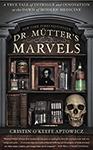 Just in time for Halloween, here is a book about a place that will send chills down your spine. The friend who accompanied me to the Mütter Museum in Philadelphia insisted we stop at a bar afterward because he needed a stiff drink. This museum is filled with strange and disturbing artifacts of human illness and deformity, like diseased body parts pickled in jars.
To many, therefore, Mütter's name is synonymous with the gruesome and macabre. This book shows how unjust that reputation is, and what an enormous influence Thomas Dent Mütter had on modern medicine and surgery.
Mütter overcame the loss of his entire family while a young child, financial hardship, and illness, to become the Chair of Surgery at Jefferson Medical College in 1841. He was equally noted for his intellectual brilliance and for the unusual warmth and respect with which he treated both patients and students.
Mütter performed every type of surgery, but was especially renowned for his compassionate care of people referred to as "monsters" - those with such severe deformities that they were excluded from society. He invented new surgical techniques to treat burn victims with terrible facial scarring and those suffering from severe cleft palate. In the early days of his career, prior to the invention of anesthetics, he operated on these patients without any pain relief. In an era when patients were told little and sometimes attacked the surgeon as they attempted to escape the operating table, Mütter developed physical and psychological techniques for preparing his patients. He carefully explained each step of the surgery and what they would experience, spending weeks meeting with a patient until they were mentally and physically prepared.
He was also a masterful educator who was adored by his students. According to the author, he was the first to introduce the Edinburgh "quizzing" system of instruction to the United States. Posing questions in class and actually wanting students to answer them was completely novel at the time in the American college classroom. Mütter avidly collected medical specimens, particularly unusual ones, to illustrate his classes. He bequeathed this large collection to establish the Mütter Museum, with the stipulation that any doctor or medical student could enter without charge.
Mütter was an early proponent of the germ theory of disease in the years when it was not embraced by most physicians, and his emphasis on cleanliness and post-surgical care were responsible for much of his success. At the time, patients were operated on then immediately packed into a dirty carriage and sent home over the cobblestone streets with little or no follow up care. Mütter worked for years to get Jefferson to set up a hospital where patients could be monitored and cared for after surgery.
This book does have a few flaws, including an irritating coyness about Mütter’s personal life and a hagiographic tone. However, it will be a fascinating read for anyone working in medical research or interested in medical history. Additionally, research administrators will appreciate that the writing of this book was supported in part by the National Endowment for the Arts’ Art Works program.
The next time I visit the Mütter Museum I will view the grotesqueries on display with new eyes, knowing that they represent a remarkable man’s efforts to add to our knowledge and alleviate human suffering.
References
Aptowicz, Cristin O’Keefe. Dr. Mütter’s Marvels: A True Tale of Intrigue and Innovation at the Dawn of Modern Medicine. Gotham Books, 2014.
#insights#Membership